
Introduction
Many people often use the terms accounting and bookkeeping interchangeably, but in reality, both serve different purposes in business finance management. While both are essential for maintaining accurate financial records, their roles, responsibilities, and outcomes differ significantly. Understanding the difference between accounting and bookkeeping helps business owners manage their finances more effectively and make informed financial decisions.
What is Bookkeeping?
Bookkeeping is the foundation of financial management. It involves systematically recording all daily financial transactions of a business, such as sales, purchases, receipts, and payments. The main objective of bookkeeping is to maintain accurate and organized financial records. It ensures that every transaction is properly documented and categorized, which helps in tracking cash flow and maintaining financial discipline. Good bookkeeping allows businesses to keep real-time financial data that supports smooth operations and compliance.
What is Accounting?
Accounting is a broader concept that goes beyond basic record-keeping. It involves analyzing, summarizing, interpreting, and reporting financial data to assess the financial health of a business. Accounting transforms raw bookkeeping data into meaningful financial reports such as profit and loss statements, balance sheets, and cash flow statements. These reports help business owners, investors, and stakeholders make strategic decisions, plan future growth, and ensure compliance with Indian taxation and regulatory standards.
Key Differences Between Accounting and Bookkeeping
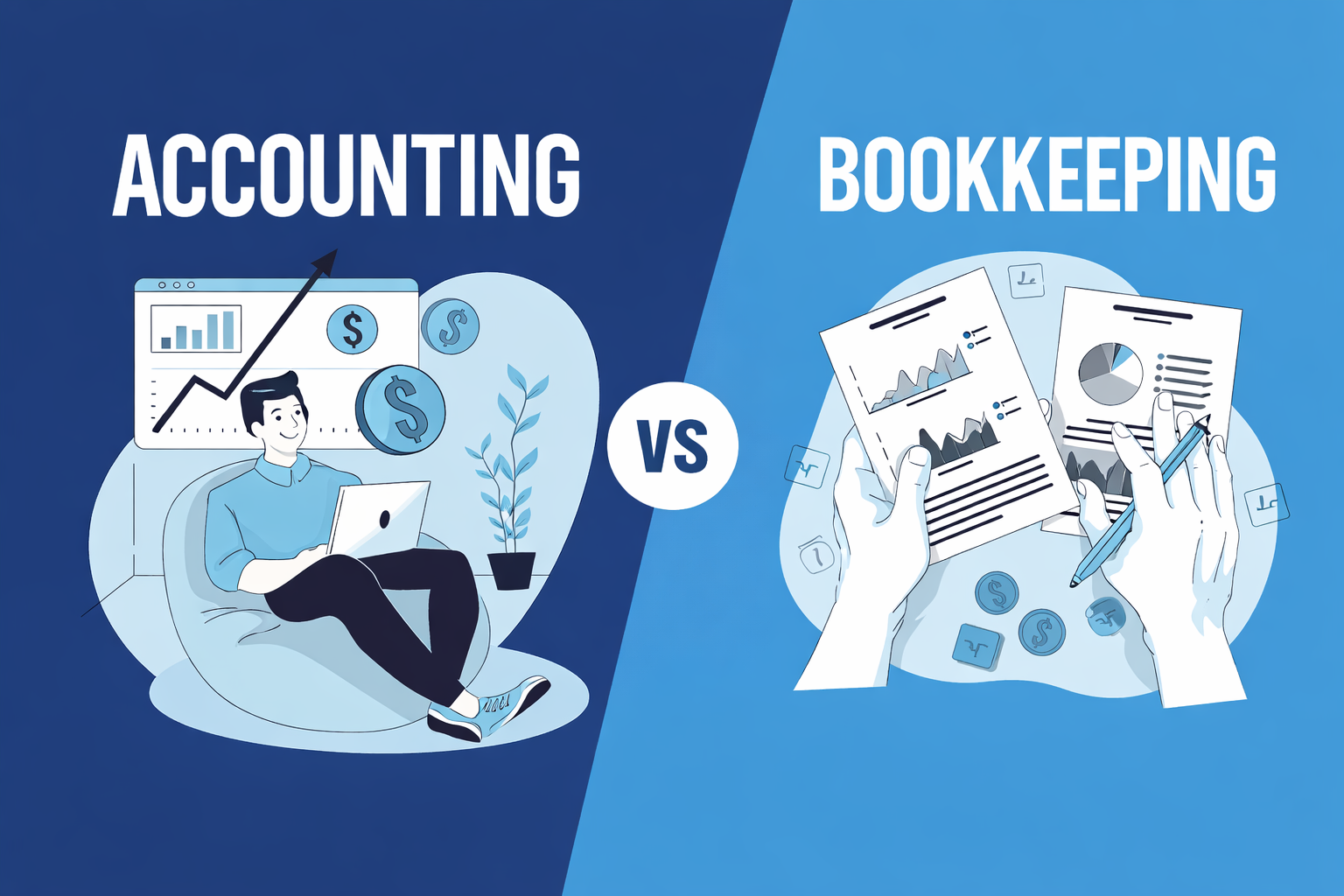
The primary difference between accounting and bookkeeping lies in their scope and purpose. Bookkeeping focuses on recording financial transactions accurately, while accounting focuses on interpreting and analyzing those records. Bookkeeping is more routine and data-oriented, whereas accounting requires professional judgment, financial expertise, and strategic thinking. Bookkeeping ensures data accuracy, while accounting ensures financial clarity and business insight.
Role in Business Decision Making
Bookkeeping provides the raw financial data necessary for tracking business performance, but accounting converts this data into actionable insights. Accounting helps in evaluating profitability, identifying cost-saving opportunities, forecasting future performance, and planning business expansion. Without accurate bookkeeping, accounting becomes ineffective, and without proper accounting, bookkeeping data remains underutilized.
Compliance and Legal Importance in India
In India, accurate bookkeeping and professional accounting are essential for complying with income tax, GST, and regulatory requirements. Bookkeeping ensures that transaction records are properly maintained, while accounting ensures correct tax calculations, timely return filing, and regulatory compliance. Proper accounting also helps during audits, assessments, and financial scrutiny by authorities.
Which One Does Your Business Need?
Every business needs both bookkeeping and accounting. Small businesses may start with basic bookkeeping to manage daily transactions, but as operations grow, professional accounting becomes crucial. Combining both ensures financial accuracy, regulatory compliance, and strategic business growth.
Conclusion
Accounting and bookkeeping are two interconnected pillars of financial management. While bookkeeping records daily transactions, accounting transforms that data into meaningful insights that guide business success. Understanding their differences helps businesses maintain financial discipline, ensure legal compliance, and achieve long-term financial stability.